
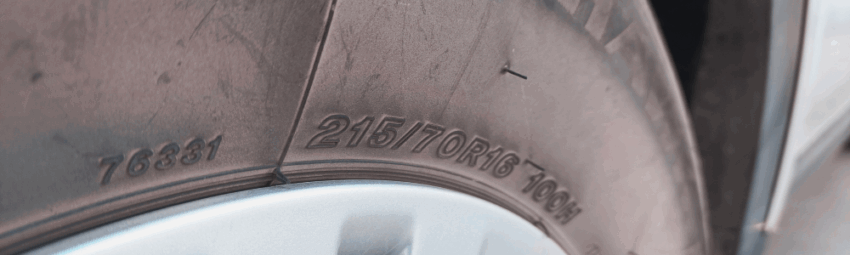
When you register a vehicle in Spain, it’s not just the paperwork you need to consider — the condition and type of tyres are just as important. The Spanish Technical Vehicle Inspection (ITV) will look closely at your tyres, and failing to meet the requirements can mean delays in getting your car legally on the road.
Each vehicle from the EU (this also includes vehicles from the UK, which even after Brexit are still being manufactured with an EU conformity number) will have a conformity number, which relates to European standardised conformity introduced back in 1996. This is normally reflected in a Certificate of Conformity issued by the manufacturer. If you don’t have one available, the ITV will instead work from a ficha técnica reducida (simplified technical sheet). Both of these documents set out the approved specifications of your vehicle, including the brand, size, load index, speed rating, and other key details of the tyres that must be fitted.
If you don’t have a Certificate of Conformity, a qualified Spanish engineer can prepare a ficha técnica reducida for you. As part of this process, the engineer will inspect the vehicle and revise the tyres to ensure that they meet the legal requirements set out by Spanish law and the ITV inspection manual. This ensures your vehicle — and its tyres — are fully compliant before you head to your ITV test.
What This Means in Practice
On the same axle, tyres must be of the same type (same size, structure, speed and load index).
Tyres must match the approved specifications shown in your EU conformity documents.
Any tyre that does not align with these standards will be flagged as a defect and will prevent you from passing the ITV.
This is not just guidance — it is written directly into Spanish law. Real Decreto 920/2017, which regulates vehicle inspections across Spain, states in Annex I, Section 5.2.3 (Neumáticos):
“Neumáticos de distinto tamaño en el mismo eje o en ruedas gemelas: Defecto Grave.
Neumáticos de distinta estructura en el mismo eje (radial, diagonal): Defecto Grave.”(Source: BOE.es – Real Decreto 920/2017)
The ITV Inspection Manual goes further, explaining that tyres on the same axle must be of the same type, which includes brand, denomination, size, category, structure, speed symbol and load index:
“En el mismo eje, todos los neumáticos serán del mismo tipo. Se entenderá por mismo tipo que no presentan entre sí diferencias en: marca/denominación comercial, medida, categoría de utilización, estructura, código de velocidad e índice de carga.”
⚠️ Important note: The law itself does not explicitly state that mixing different brands of tyre is a cause for failure. However, the Inspection Manual — which is binding on ITV stations — interprets “same type” to include the brand and model. In practice, most ITV centres across Spain will apply this interpretation, meaning tyres of different brands on the same axle are very likely to result in a fail.
You can review the official ITV manual here:
👉 Manual de procedimiento de inspección de estaciones ITV – Versión 7.7.0 (PDF)
You can also read more about the ficha técnica reducida process here:
👉 Upsticks – Ficha Técnica Reducida
If you are interested in registering your Vehicle in Spain, contact us using this FORM